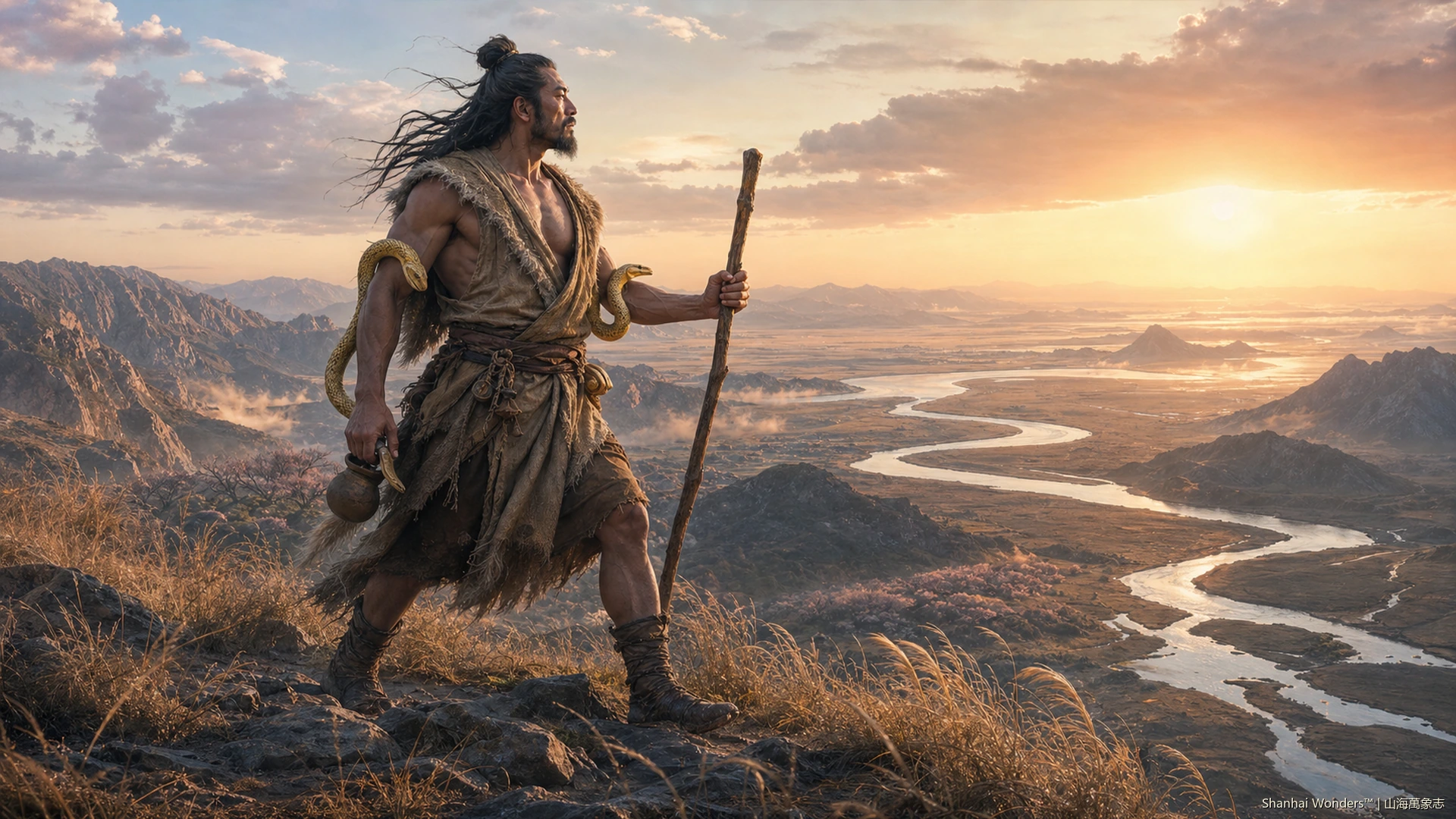
Recorded in the text
Kua Fu pursued the sun. Still thirsty after drinking from the Yellow and Wei Rivers, he died before reaching the Great Marsh; the staff he left behind became the Deng Forest.
夸父
 An original reconstruction in its Shanhai habitat
“Kua Fu raced with the sun and entered its light. Thirsty, he drank from the Yellow and Wei Rivers, but they were not enough. Before he reached the Great Marsh to the north, he died of thirst on the road. The staff he cast aside became the Deng Forest.”公版原文:夸父與日逐走,入日。渴欲得飲,飲於河、渭;河、渭不足,北飲大澤。未至,道渴而死。棄其杖,化為鄧林。— Shanhaijing · Classic of Regions Beyond the Northern Seas / Classic of the Great Wilderness: North
The Ming woodblock image stages the pursuit as a complete event: the sun ahead, Kua Fu striding through mountains and cloud, and the body already under strain. The digital reconstruction keeps the journey, thirst, rivers, death, and the staff becoming Deng Forest as one connected narrative rather than reducing Kua Fu to a generic giant.
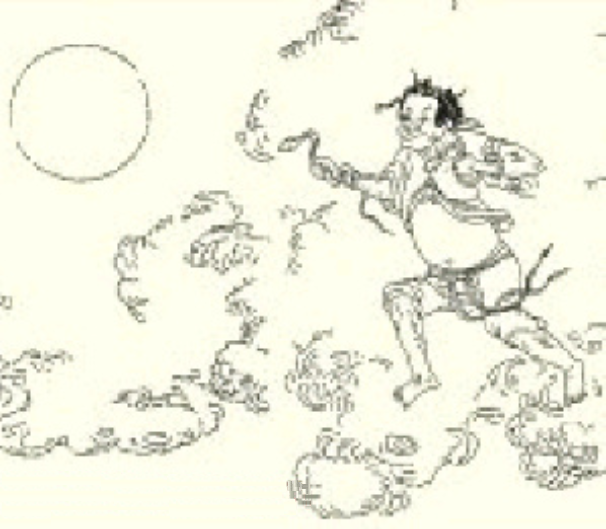 Open historical image ↗
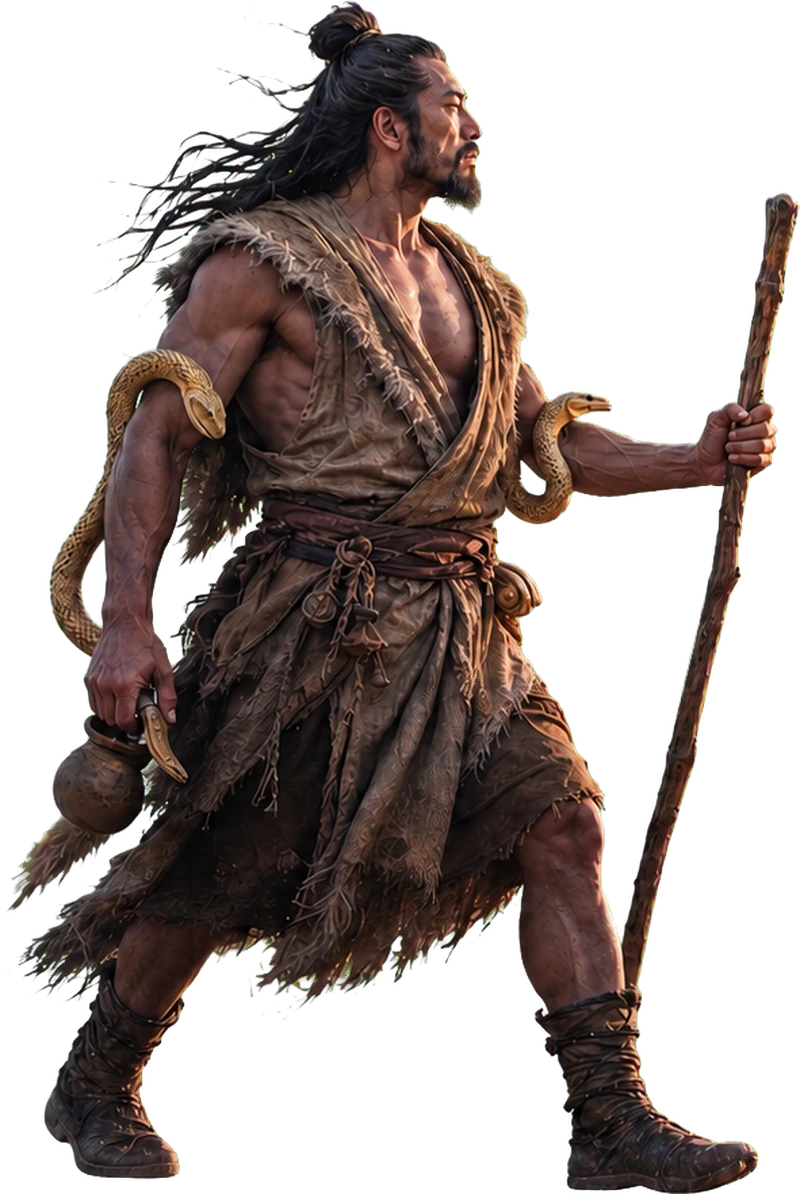 Open web preview ↗
The reconstruction keeps features stated in the text and visible in the historical image. Material, colour, motion, habitat, and camera are original project decisions.
Kua Fu pursued the sun. Still thirsty after drinking from the Yellow and Wei Rivers, he died before reaching the Great Marsh; the staff he left behind became the Deng Forest.
A round sun, Kua Fu in a long running stride, raised arms, mountain rocks, cloud forms, and a scene composed as pursuit rather than a static portrait.
Body scale, musculature, clothing, travel distance, heat, river volume, the precise confluence landscape, death posture, and the transformation from staff to Deng Forest.
Library of Congress, Chinese Rare Book Collection; Juan 8, Image 4; call number DS707.S473; LCCN 2001530410. The reader image is a verified 606 × 529 preview; the linked institutional page remains the full-source authority pending a local archival download of the high-resolution scan.
The Library of Congress copy is catalogued to 1628–1644. Its 74-image system is nearly identical to the 75 illustrations associated with the 1597 Jiang Yikui edition, but the two dates must not be silently collapsed into one edition statement.
Kua Fu pursued the sun. Still thirsty after drinking from the Yellow and Wei Rivers, he died before reaching the Great Marsh; the staff he left behind became the Deng Forest.
Credible human load bearing, long-distance gait and arid climate establish a giant scale. Snakes, staff, vessel and terrain remain evidence-ranked without turning Kua Fu into a violent monster.
Colour, material and movement not stated in the source are evidence-led artistic reconstructions.Kua Fu ran toward the sun, drank from two rivers, and still could not reach the northern marsh. His life ended, yet his staff became a forest. The ancient story holds ambition, bodily limits, failure, and renewal within one image.
Reading boundary: Kua Fu's pursuit, thirst, death, and the staff becoming Deng Forest belong to the ancient narrative; later heroic or tragic interpretations should remain visibly interpretive.Kua Fu's story becomes richer when the pursuit, the physical limit, and the transformed staff are read as three connected movements.
Kua Fu races with the sun, drinks from the Yellow and Wei Rivers, and still dies of thirst before reaching the Great Marsh.
Later readers often celebrate impossible striving. The ancient sequence also keeps exhaustion, failure, death, and transformation in view.
Human anatomy, long-distance gait, vessel scale, dry air, river volume, and the staff-to-forest transition are project reconstructions—not measurements supplied by the text.
This diagram expresses textual direction and relation only; it does not claim unverified modern coordinates.
The river scene reconstructs the drinking episode; the Deng Forest scene is a symbolic coda. The yellow snakes derive from the Great Wilderness: North, while the rivers and Deng Forest derive from Regions Beyond the Northern Seas—two textual traditions read here in visible layers.
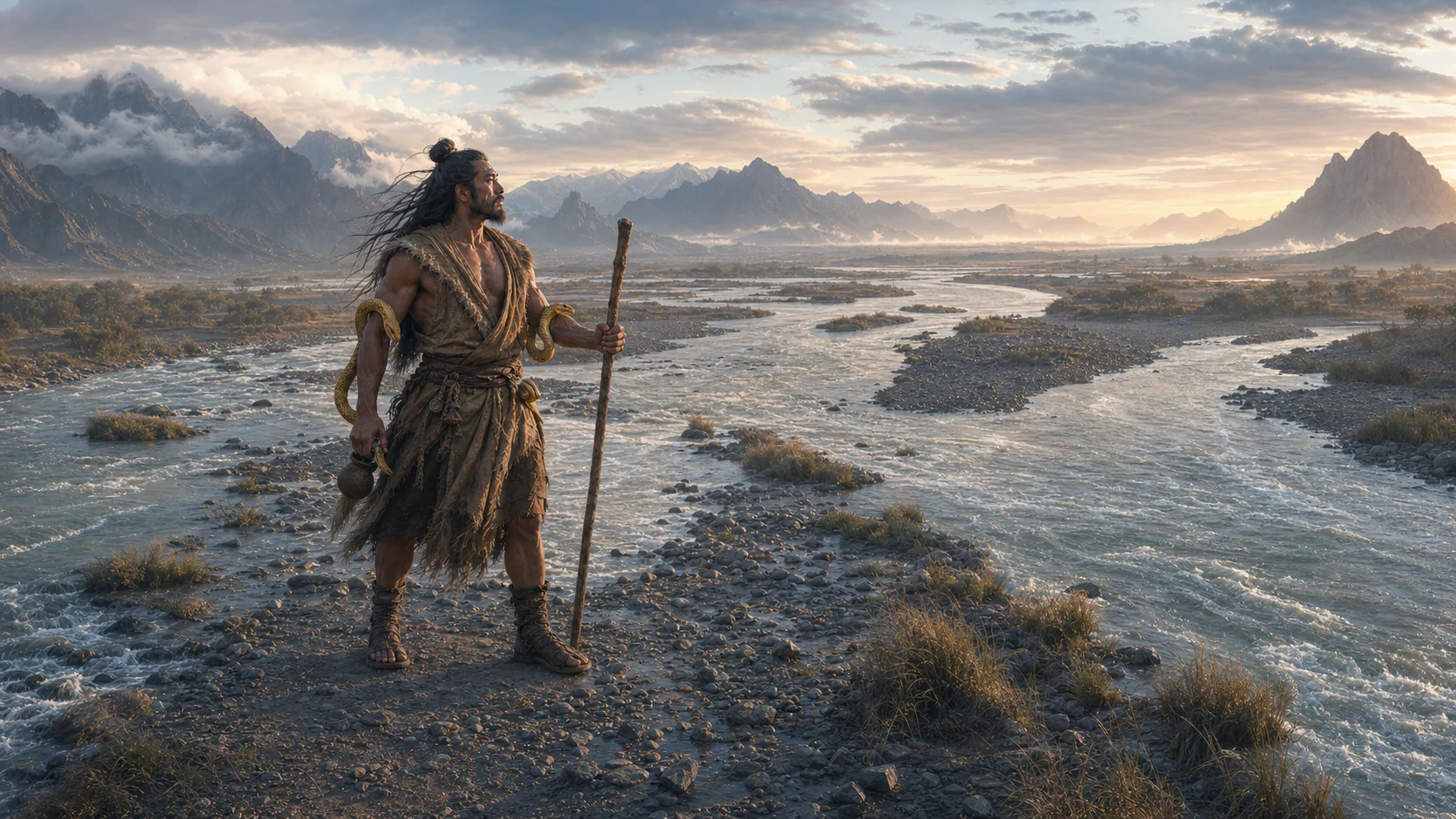
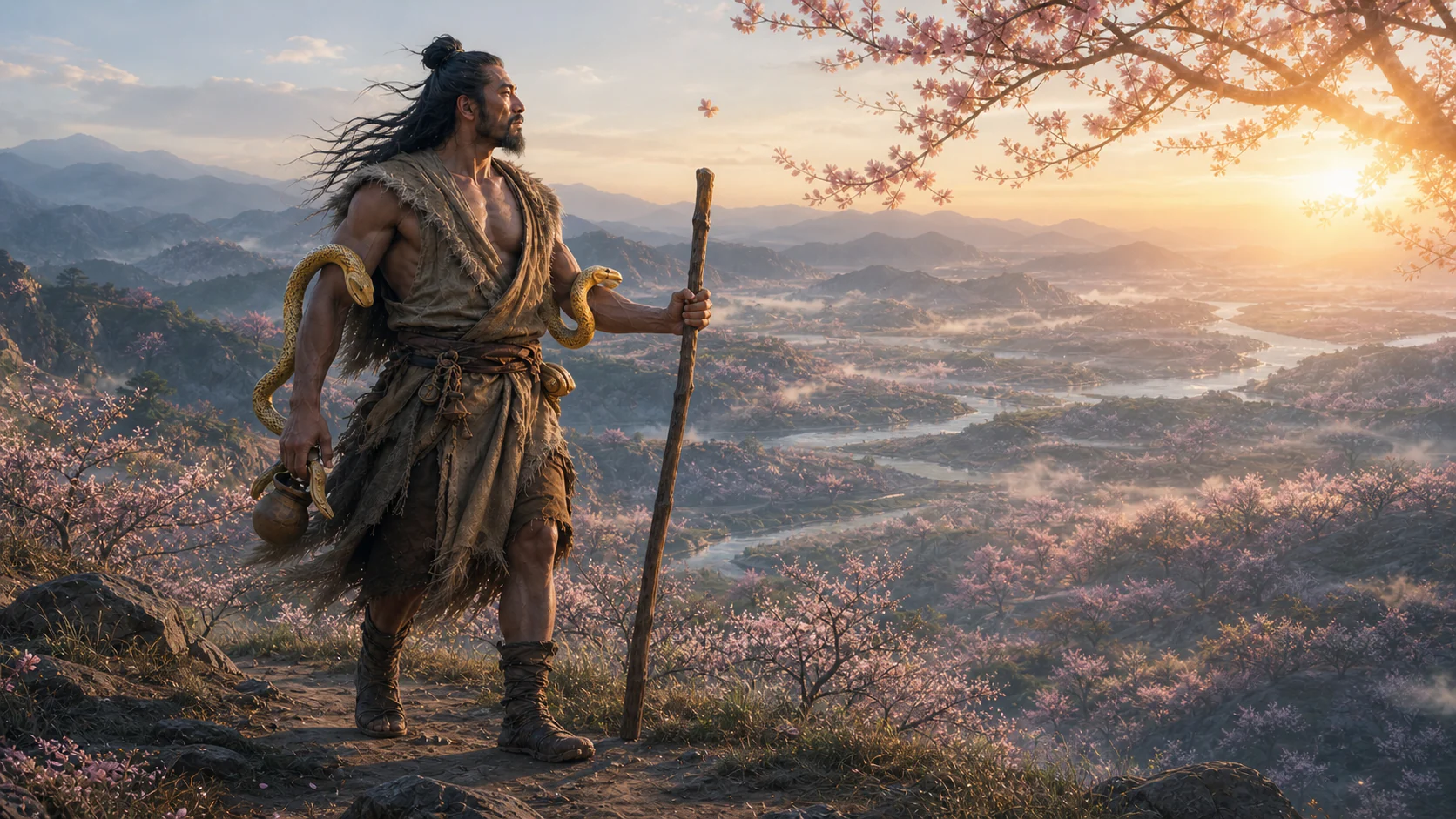
Multiple ratios use independent compositions or controlled background extension—not mechanical crops. Open any framed preview to view the full image. Free editions carry a light brand mark.
This profile begins with the passage associated with Yellow River · Wei River · Great Marsh · Deng Forest. Ancient text and modern explanation remain visibly separate.
Open the chapter register ↗Reading boundary: Kua Fu's pursuit, thirst, death, and the staff becoming Deng Forest belong to the ancient narrative; later heroic or tragic interpretations should remain visibly interpretive.
Credible human load bearing, long-distance gait and arid climate establish a giant scale. Snakes, staff, vessel and terrain remain evidence-ranked without turning Kua Fu into a violent monster.
Read methods and rights ↗