Recorded in the text
Yellow sac, cinnabar fire, six legs, four wings, faceless yet knowing song and dance.
帝江
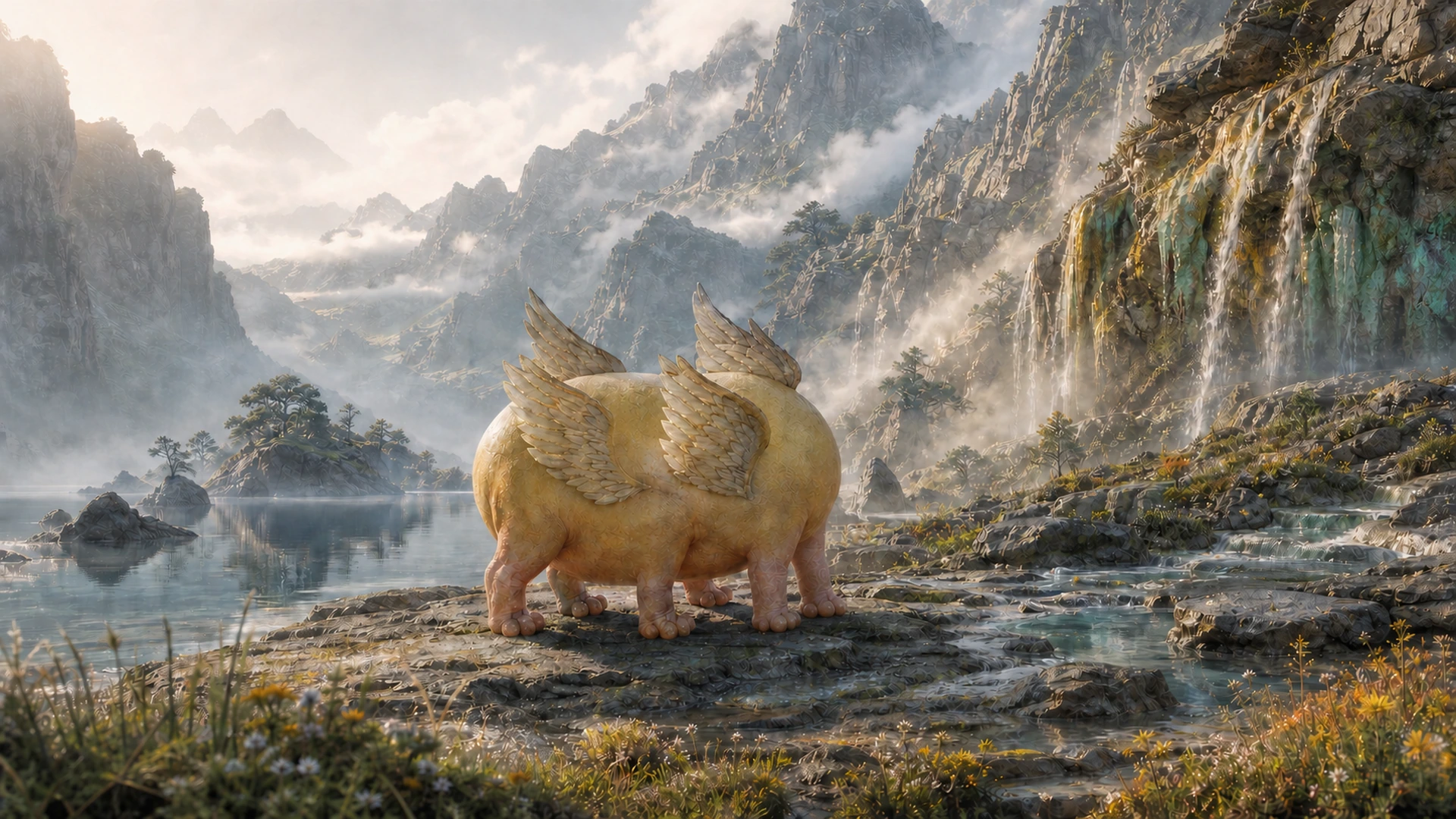 Dawn beside Mount Tian
“There is a deity shaped like a yellow sac, red as cinnabar fire, with six feet and four wings. Its features are undifferentiated and it has no face, yet it knows song and dance. This is Dijiang.”公版原文:有神焉,其状如黄囊,赤如丹火,六足四翼,浑敦无面目,是识歌舞,实惟帝江也。— Shanhaijing · Classic of the Western Mountains
The historical figure at left preserves the Dijiang schema in Wu Renchen's 1667 edition. At right is a web preview extracted from the approved scene master. The reconstruction keeps the headless, faceless sac-like body, six legs, four wings and four-toed feet, while translating the diagram into a credible living being through weight, material, light and habitat.
 Open historical image ↗
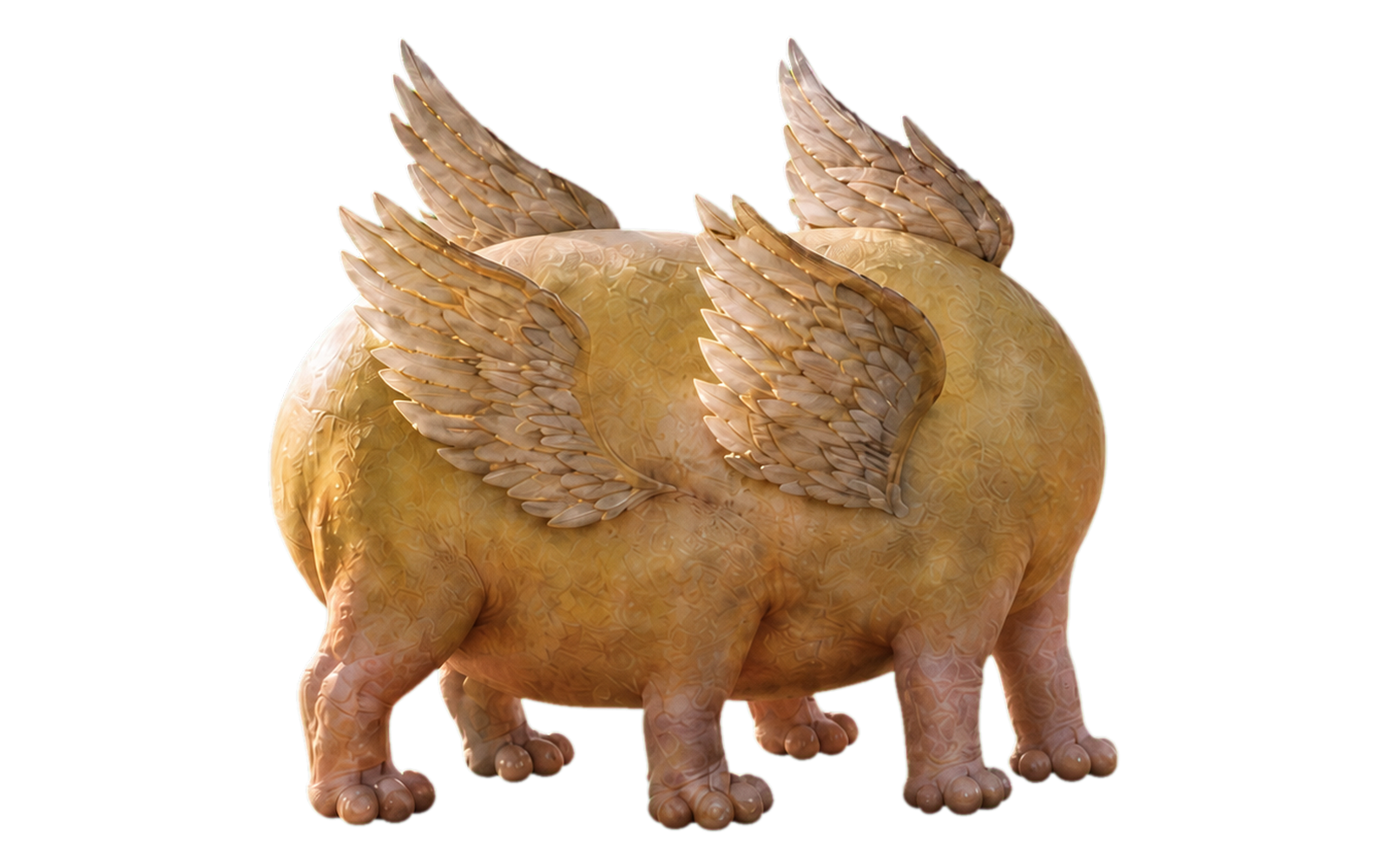 Open web preview ↗
The reconstruction preserves the headless, faceless, compact sac-like body, six legs, four wings and four toes. Symmetry, gravity, gait and grounded feet make it biologically coherent; living tissue, feathers, transitional colour and the Mount Tian habitat are original interpretations grounded in the source.
Yellow sac, cinnabar fire, six legs, four wings, faceless yet knowing song and dance.
A compact sac-like body, three legs per side, layered wings, four toes and a headless silhouette whose ends closely correspond.
Tissue, feathers, joints, weight-bearing feet, transitional colour, light and Mount Tian habitat.
A deity with no differentiated facial features, shaped like a yellow sac and red as cinnabar fire, with six legs and four wings. Its defining gift is rhythm and dance.
A soft sac-like body defines the silhouette. Six feet create a triple rhythm and four wings steer its dance; no eyes, mouth or nose are added.
Colour, material and movement not stated in the source are evidence-led artistic reconstructions.Dijiang's central narrative is already in the Shanhaijing: it has no face, yet knows song and dance. The image suggests undifferentiated life, rhythm and vitality rather than simple horror. Zhuangzi's famous tale of boring seven openings into Hundun is related by later interpretation, but Hundun and Dijiang should not be silently treated as identical.
Reading boundary: Zhuangzi's Hundun story may be discussed comparatively, but it cannot replace the Dijiang passage in the Western Mountains.Text, later comparison, and reconstruction answer three different questions.
The Western Mountains describes a deity like a yellow sac, red as cinnabar fire, with six legs and four wings. Faceless, it nevertheless knows song and dance.
The famous story of boring seven openings into Hundun is a valuable comparison, but the identification is interpretive rather than explicit in the Dijiang passage.
The project builds character through weight, six-beat gait, four wings, rotation, and colour while refusing to add eyes, mouth, or a hidden face.
This diagram expresses textual direction and relation only; it does not claim unverified modern coordinates.
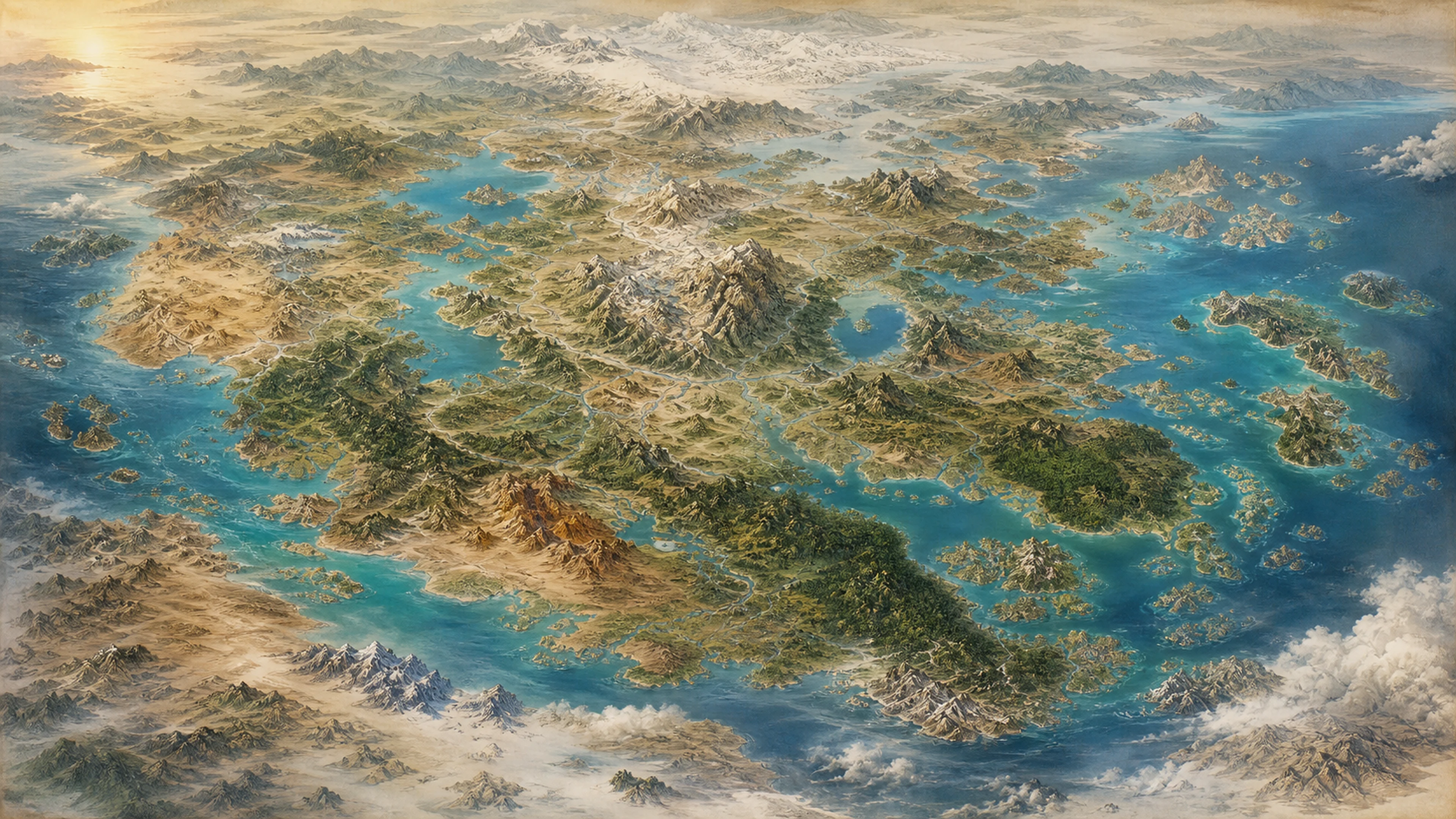 WESTERN MOUNTAINS西山經THIRD WESTERN ROUTE西次三經Mount Tian天山 · 帝江主場
The Western Mountains text places Dijiang at Mount Tian. Region, route and mountain appear together so Dijiang remains connected to the landscape described by the source. This atlas position follows the text; it is not a claim of modern latitude and longitude.
Open the Shanhaijing World Atlas ↗Six feet settle beside the jade-coloured falls; under cinnabar dawn, four wings gather the mountain wind into rhythm.


Multiple ratios use independent compositions or controlled background extension—not mechanical crops. Open any framed preview to view the full image. Free editions carry a light brand mark.
The Dijiang passage remains distinct from Zhuangzi's Hundun story, so a later parable does not replace the source record.
University of Washington Libraries; call number DS707.S4 1667. The image supplies Dijiang's core historical schema.
The reconstruction keeps six legs, four wings, a faceless form and sac-like body, then gives it life through weight, gait, feathers, and the Mount Tian habitat.


