Recorded in the text
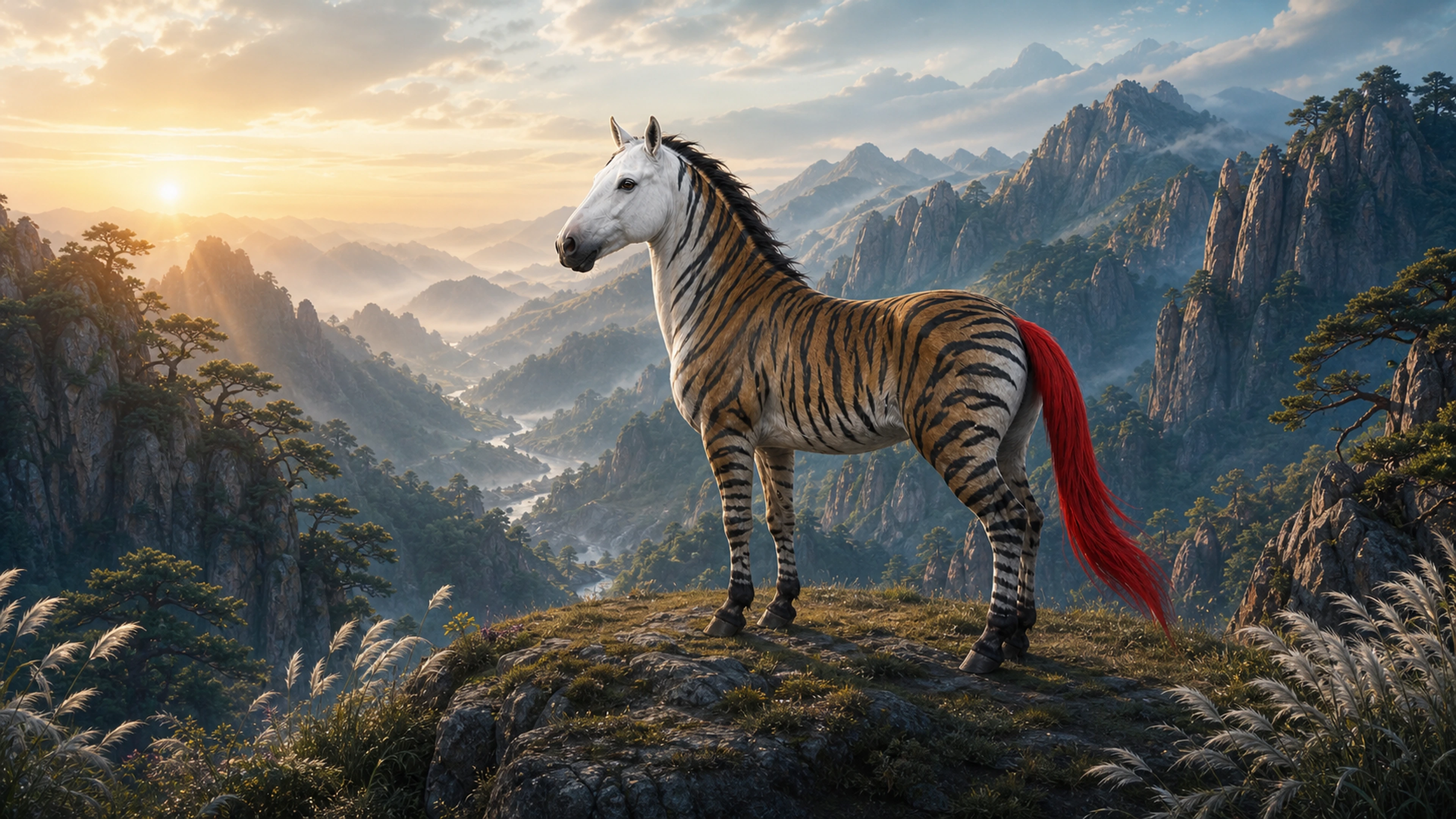
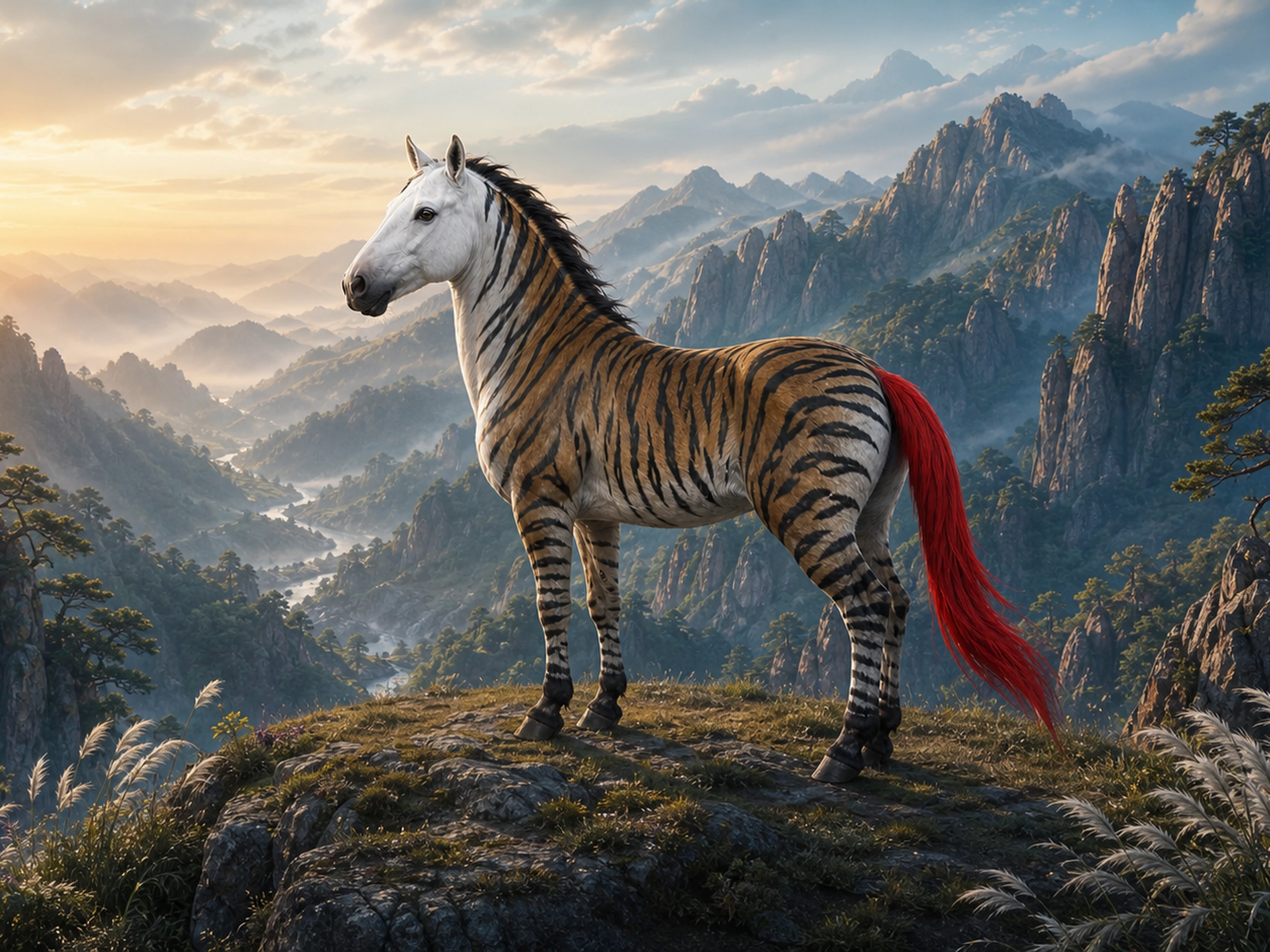
Horse-shaped, white-headed, tiger-patterned and red-tailed; its call resembles a song, and wearing it is said to benefit descendants.
鹿蜀
 An original reconstruction in its Shanhai habitat
“It is shaped like a horse with a white head, tiger-like markings and a red tail. Its call resembles song, and its name is Lushu. Wearing it is said to benefit one's descendants.”公版原文:其状如马而白首,其文如虎而赤尾,其音如谣,其名曰鹿蜀,佩之宜子孙。— Shanhaijing · Classic of the Southern Mountains
The historical line drawing makes the horse-shaped body and striped coat visible. The digital reconstruction keeps that equine foundation instead of illustrating the name as a deer.
 Open historical image ↗
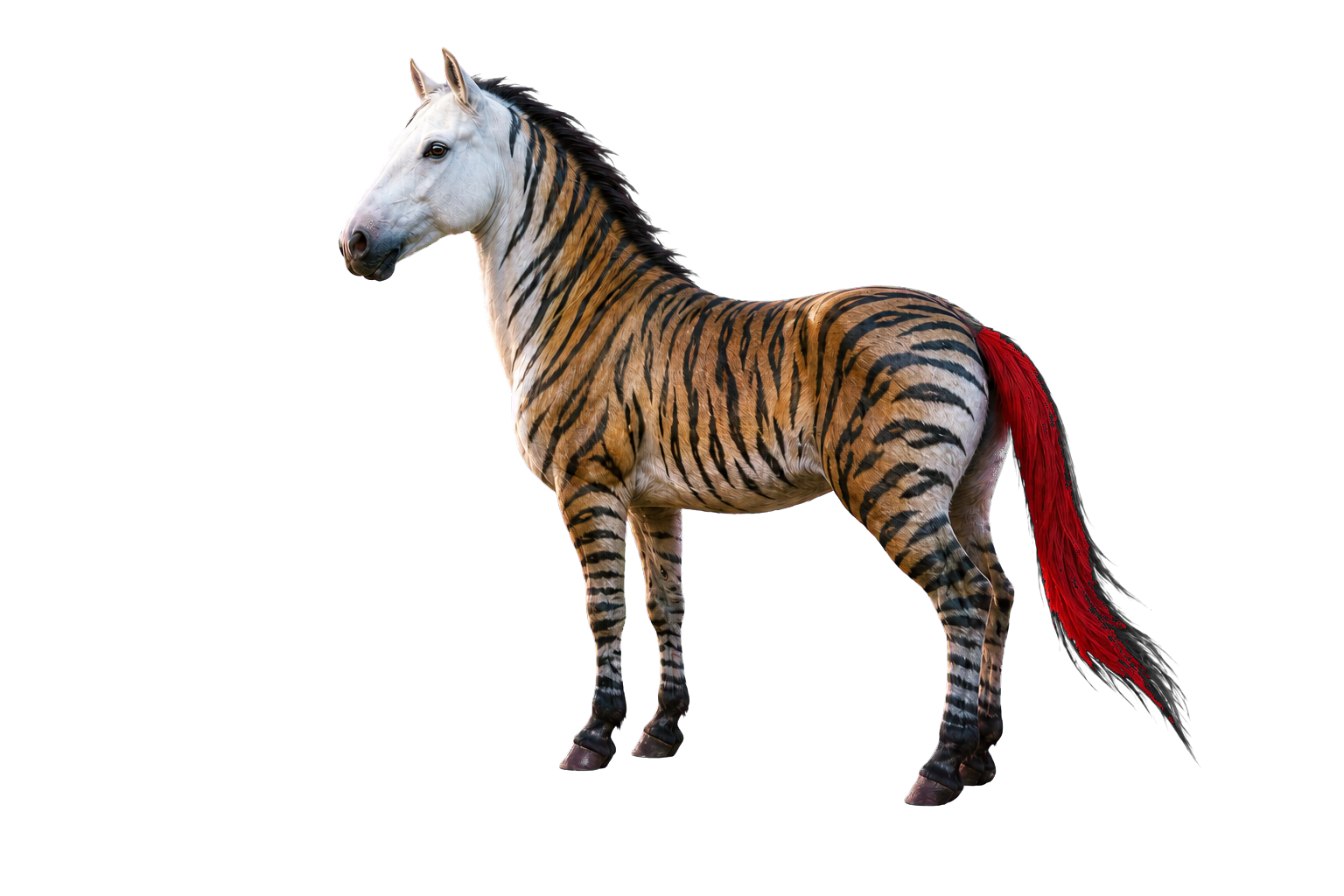 Open web preview ↗
The reconstruction keeps features stated in the text and visible in the historical image. Material, colour, motion, habitat, and camera are original project decisions.
Horse-shaped, white-headed, tiger-patterned and red-tailed; its call resembles a song, and wearing it is said to benefit descendants.
A horse-like profile, long legs, striped body, pale head area, and long tail.
Coat material, red tail, musculature, gait, age, light, and the Niuyang habitat.
Owner-supplied reference; exact folio, repository, and digital-object link remain to be catalogued.
Horse-shaped, white-headed, tiger-patterned and red-tailed; its call resembles a song, and wearing it is said to benefit descendants.
Based on wild horse structure and deliberately not depicted as a deer.
Colour, material and movement not stated in the source are evidence-led artistic reconstructions.Lushu is not attached to a surviving heroic narrative. Its cultural motif centres on the claim that wearing it benefits descendants, reflecting an ancient association between strange animals, bodily materials and hopes for lineage. The project records this belief without presenting it as a modern medical or efficacy claim.
Reading boundary: the claim that wearing Lushu benefits descendants records an ancient belief; it is not modern medical, fertility, or efficacy advice.Lushu rewards readers who separate its name, recorded anatomy, and ancient protective belief.
The Southern Mountains does not describe a deer. It records a horse-like creature whose call resembles a song.
The phrase about wearing it belongs to a historical system linking unusual animals and bodily materials to family continuity.
The reconstruction begins with equine anatomy, then adds the recorded head, pattern, tail, and vocal character. Coat texture and habitat remain artistic choices.
This diagram expresses textual direction and relation only; it does not claim unverified modern coordinates.
Changing weather and habitat reveal different moments of life while the source-grounded identity remains consistent.


Multiple ratios use independent compositions or controlled background extension—not mechanical crops. Open any framed preview to view the full image. Free editions carry a light brand mark.
This profile begins with the passage associated with Mount Niuyang. Ancient text and modern explanation remain visibly separate.
Open the chapter register ↗Reading boundary: the claim that wearing Lushu benefits descendants records an ancient belief; it is not modern medical, fertility, or efficacy advice.
Based on wild horse structure and deliberately not depicted as a deer.
Read methods and rights ↗