Recorded in the text
Crow-like, with a patterned head, white beak and red feet; it carries wood and stones from the western mountains to the Eastern Sea.
精衛
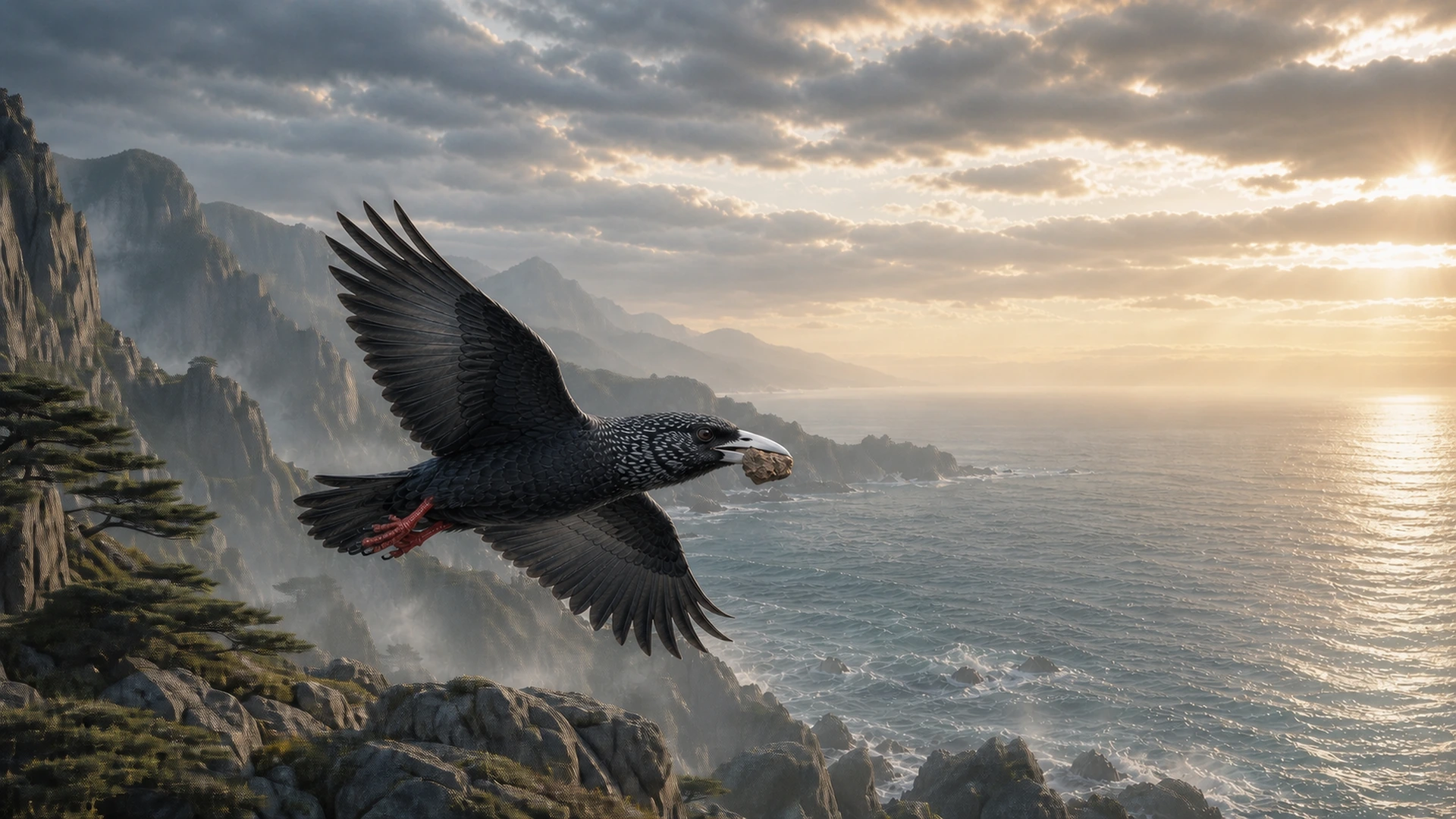 An original reconstruction in its Shanhai habitat
“It is shaped like a crow, with a patterned head, white beak and red feet, and is named Jingwei. It was Nüwa (女娃), the Yan Emperor's youngest daughter, who drowned in the Eastern Sea and did not return; therefore she became Jingwei, constantly carrying wood and stones from the western mountains to fill the sea.”公版原文:其状如乌,文首、白喙、赤足,名曰精卫……常衔西山之木石,以堙于东海。— Shanhaijing · Classic of the Northern Mountains
A Ming illustration shows Jingwei in flight carrying a leafy branch. The digital reconstruction returns to the source traits—crow-like form, patterned head, white beak and red feet—while depicting either wood or stone across different journeys. It is neither a mechanical colourisation nor the only possible reading.
 Open historical image ↗
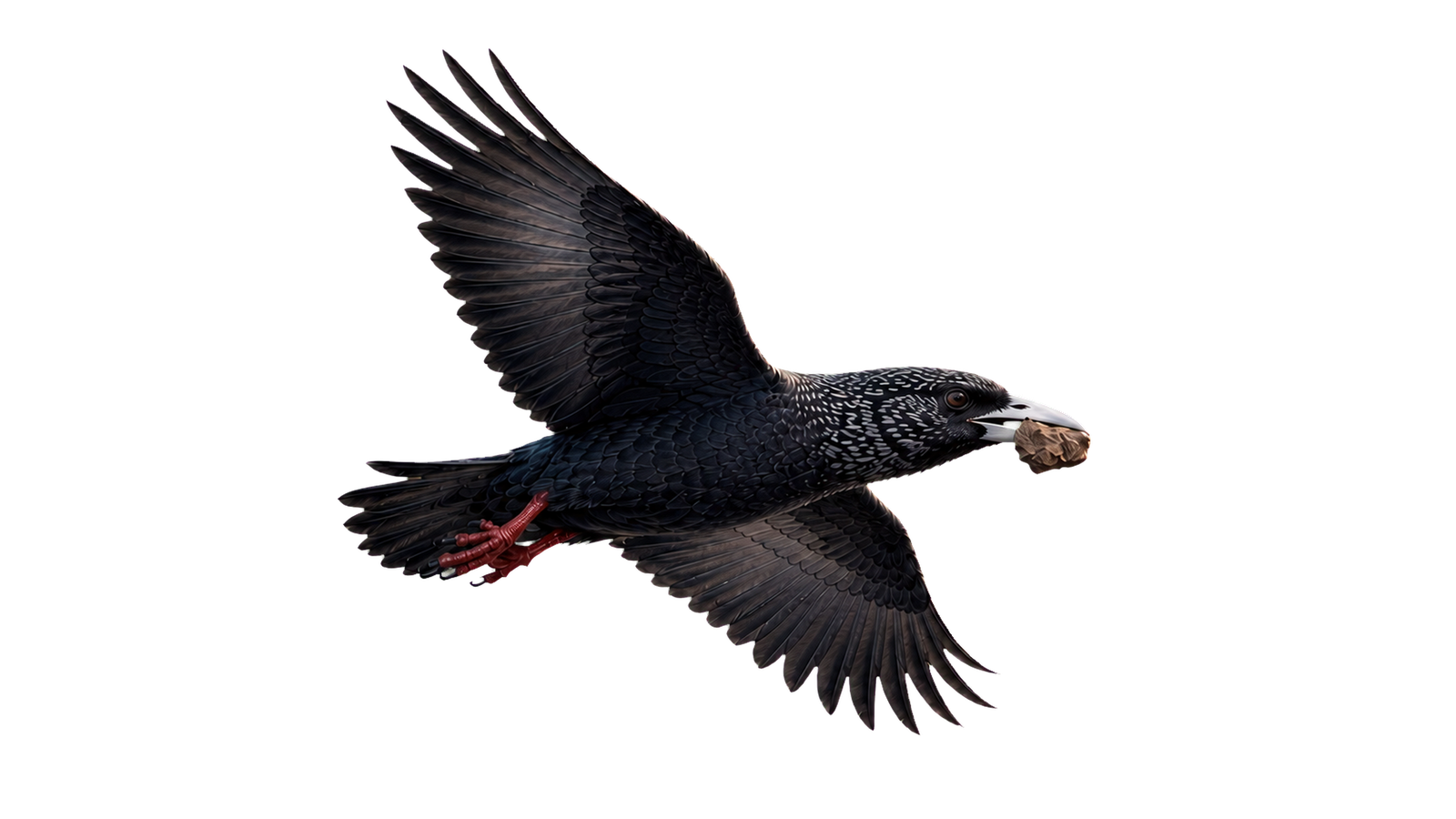 Open web preview ↗
The reconstruction locks the crow-like form, patterned head, white beak and red feet, then uses plausible avian anatomy, flight feathers and tucked feet to create a living presence. Plumage, light and the particular landscape are evidence-led artistic interpretations.
Crow-like, with a patterned head, white beak and red feet; it carries wood and stones from the western mountains to the Eastern Sea.
A bird in flight, both wings spread, carrying a leafy branch in its beak.
Plumage, feather layering, body proportion, flight dynamics, light and the particular route from Mount Fajiu to the Eastern Sea.
The bird transformed from Nüwa (女娃), the Yan Emperor's youngest daughter, after she drowned in the Eastern Sea—not the creator goddess Nüwa (女媧). Crow-like, patterned-headed, white-beaked and red-footed, it carries wood and stone to fill the sea.
Corvid anatomy supports credible flight, with actions centred on gathering, crossing, dropping and returning. It is not humanised as a winged girl and is not conflated with the goddess Nüwa (女媧).
Colour, material and movement not stated in the source are evidence-led artistic reconstructions.Nüwa (女娃), the Yan Emperor's youngest daughter, drowned while travelling at the Eastern Sea and became the bird Jingwei. Day after day she carries twigs and stones from the western mountains and drops them into the sea that took her life. The sea is immeasurable and the bird is small, yet the tale became an enduring emblem of refusing to abandon an impossible task. This Nüwa is not the creator goddess Nüwa (女媧).
The sea has no shore; the will to carry one more twig does not cease.Reading boundary: the Northern Mountains records Nüwa becoming Jingwei and carrying wood and stones to the sea; later meanings and episodes should be read as later reception.
Jingwei matters because identity, action, and geography are already joined in the source.
The Yan Emperor's youngest daughter drowned in the Eastern Sea and became Jingwei, a crow-like bird with patterned head, white beak, and red feet.
Later readers made Jingwei an emblem of persistence because it repeatedly carries wood and stone from the western mountains to the sea.
Crow-like anatomy, tucked feet, load-bearing beak, wind, distance, and the chosen stone are reconstruction decisions, not surviving footage of an ancient animal.
This diagram expresses textual direction and relation only; it does not claim unverified modern coordinates.
Changing weather and habitat reveal different moments of life while the source-grounded identity remains consistent.


Four true screen ratios, presented without stretching. Open any framed preview to view the full-size wallpaper in a new page. Free editions carry a light brand mark.
This profile begins with the passage associated with Mount Fajiu · Eastern Sea. Ancient text and modern explanation remain visibly separate.
Open the chapter register ↗Reading boundary: the Northern Mountains records Nüwa becoming Jingwei and carrying wood and stones to the sea; later meanings and episodes should be read as later reception.
Corvid anatomy supports credible flight, with actions centred on gathering, crossing, dropping and returning. It is not humanised as a winged girl and is not conflated with the goddess Nüwa (女媧).
Read methods and rights ↗


