Recorded in the text
Fox-shaped, with nine tails and a cry compared to an infant.
九尾狐
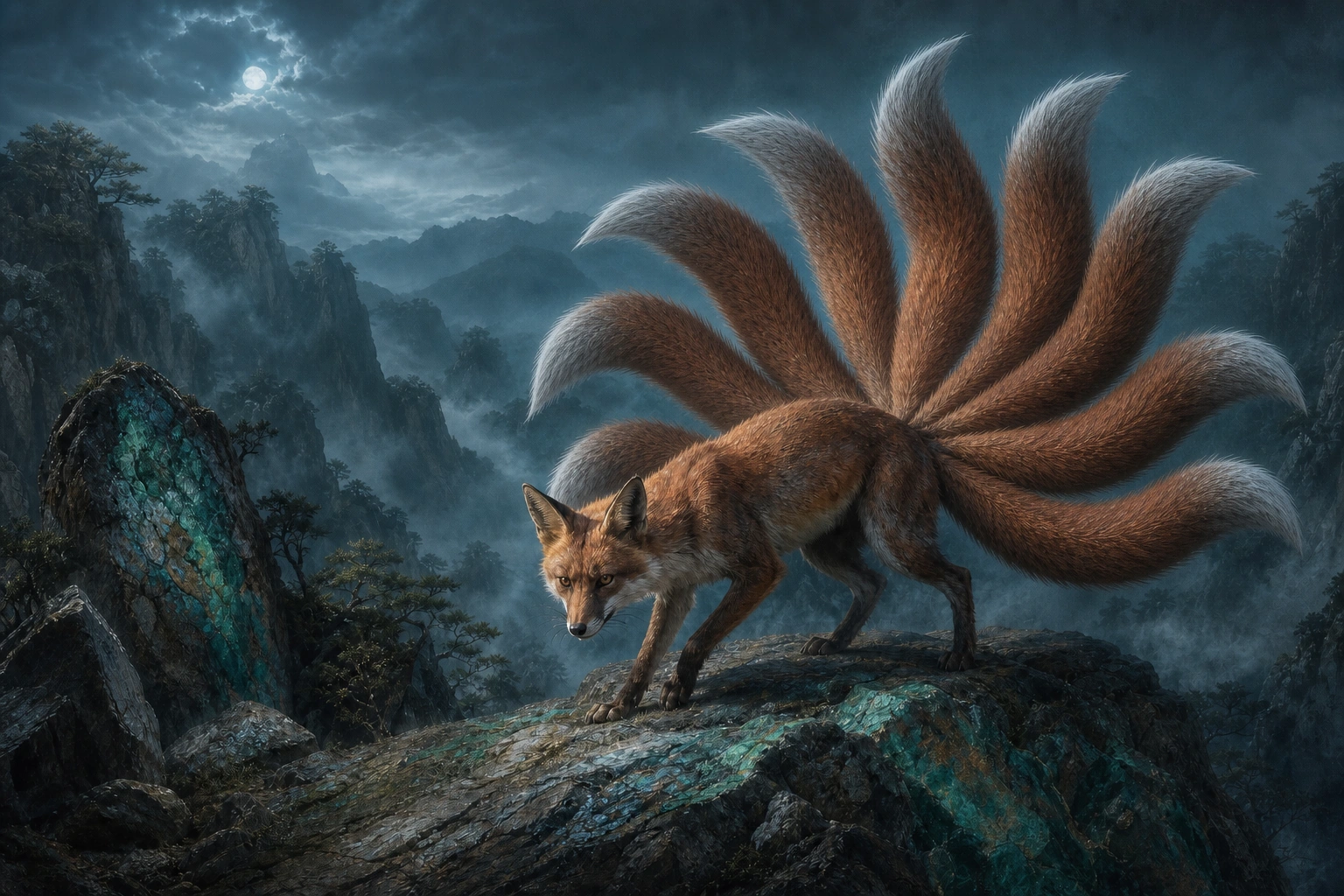 Moonlight over Qingqiu
“There is a beast shaped like a fox with nine tails. Its cry is like an infant; it can devour humans, and whoever eats it will be protected from gu poison.”公版原文:有獸焉,其狀如狐而九尾,其音如嬰兒,能食人,食者不蠱。— Shanhaijing · Classic of the Southern Mountains
Read the surviving historical image first, then see how Shanhai Wonders reinterprets the Nine-tailed Fox through a contemporary realist reconstruction. The comparison shows creative lineage—not a claim that the modern image is the single ancient truth.
 Open source crop ↗
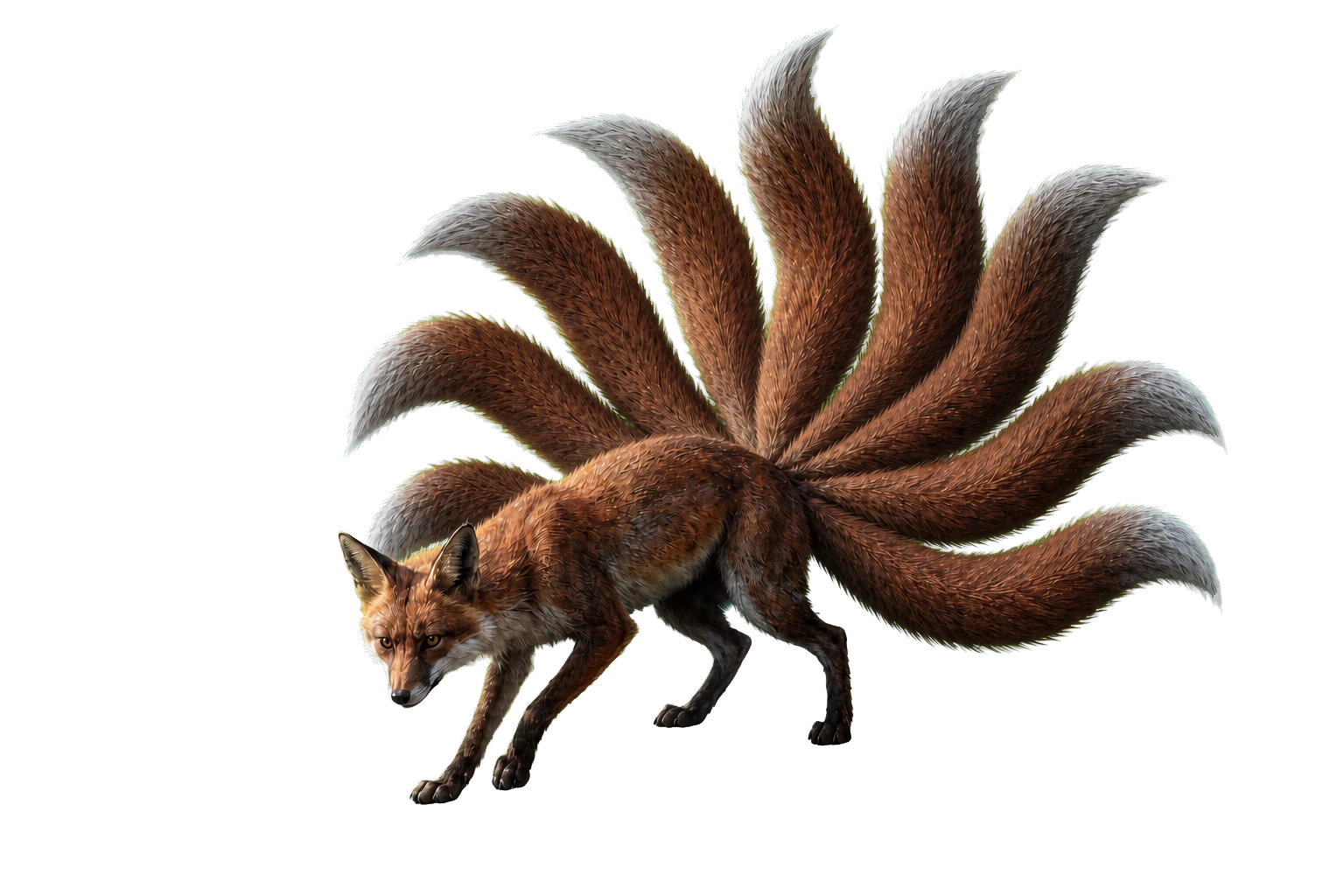 Open web preview ↗
The reconstruction preserves the fox form, four feet and nine tails, while using plausible fox anatomy, gravity and a shared tail root to reinterpret the old image. Coat, light, gait and habitat are artistic reconstructions—not a mechanical colourisation or the only possible reading.
Fox-shaped, with nine tails and a cry compared to an infant.
A fox-like head, four feet, bundled spreading tails, and a posture belonging to the historical pictorial tradition.
Coat colour, musculature, fur detail, tail-root structure, age, lighting, and specific habitat.
The complete historical figure shown here was supplied by the project owner for version and morphology research. Before commercial publication, the full repository scan must still be checked for the exact volume, folio, digital-object link, and repository terms. The modern composition, materials, and rendered artwork are independent project creations.
A dangerous creature of Mount Qingqiu: fox-shaped, nine-tailed, and crying like an infant. Later romance and shapeshifting lore belongs to a different tradition.
Built on real fox anatomy and gait; nine independently moving tails form an asymmetrical fan from the sacrum. Coat colour, body size and tail arrangement are artistic reconstruction.
Colour, material and movement not stated in the source are evidence-led artistic reconstructions.The Shanhaijing first presents the Nine-tailed Fox as a dangerous man-eating being of Mount Qingqiu. Later traditions added auspicious, numinous and shapeshifting meanings, while fiction developed extensive fox-spirit tales. These layers shaped the modern image but should not be read back into the source passage.
Reading boundary: later auspicious, shapeshifting, and fox-spirit traditions are cultural developments, not claims made by the source passage.One enduring figure becomes clearer when source, later reception, and reconstruction remain distinct.
The Southern Mountains places it at Mount Qingqiu: fox-shaped, nine-tailed, crying like an infant, able to eat people, with eating it associated with freedom from gu.
Later traditions added numinous, auspicious, shapeshifting, and romantic meanings. They explain the modern afterlife of the image, not the original passage.
Brown coat, shared tail root, age, moonlight, and the Qingqiu habitat are original choices informed by fox anatomy and scene logic—not facts stated by the text.
This diagram expresses textual direction and relation only; it does not claim unverified modern coordinates.
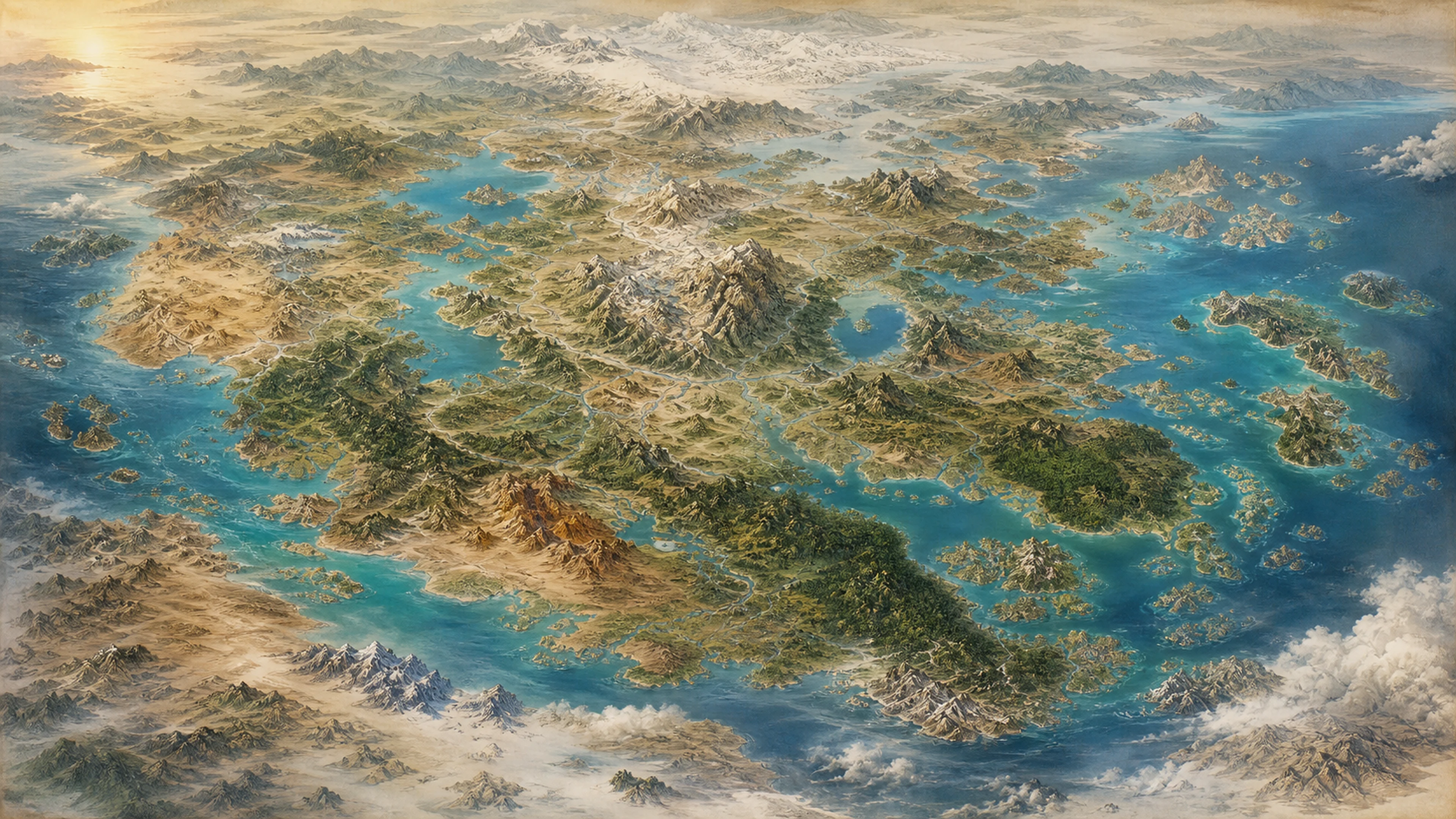 SOUTHERN MOUNTAINS南山經FIRST SOUTHERN ROUTE南山經第一列Mount Qingqiu青丘之山
The source places the Nine-tailed Fox at Mount Qingqiu. Region, route and mountain appear together so the creature remains legible within its world. This atlas position follows textual order; it is not a claim of modern latitude and longitude.
Open the Shanhaijing World Atlas ↗Dawn catches a young fox crossing rain-dark stone; moonlight holds the adult among layered peaks and cloud.

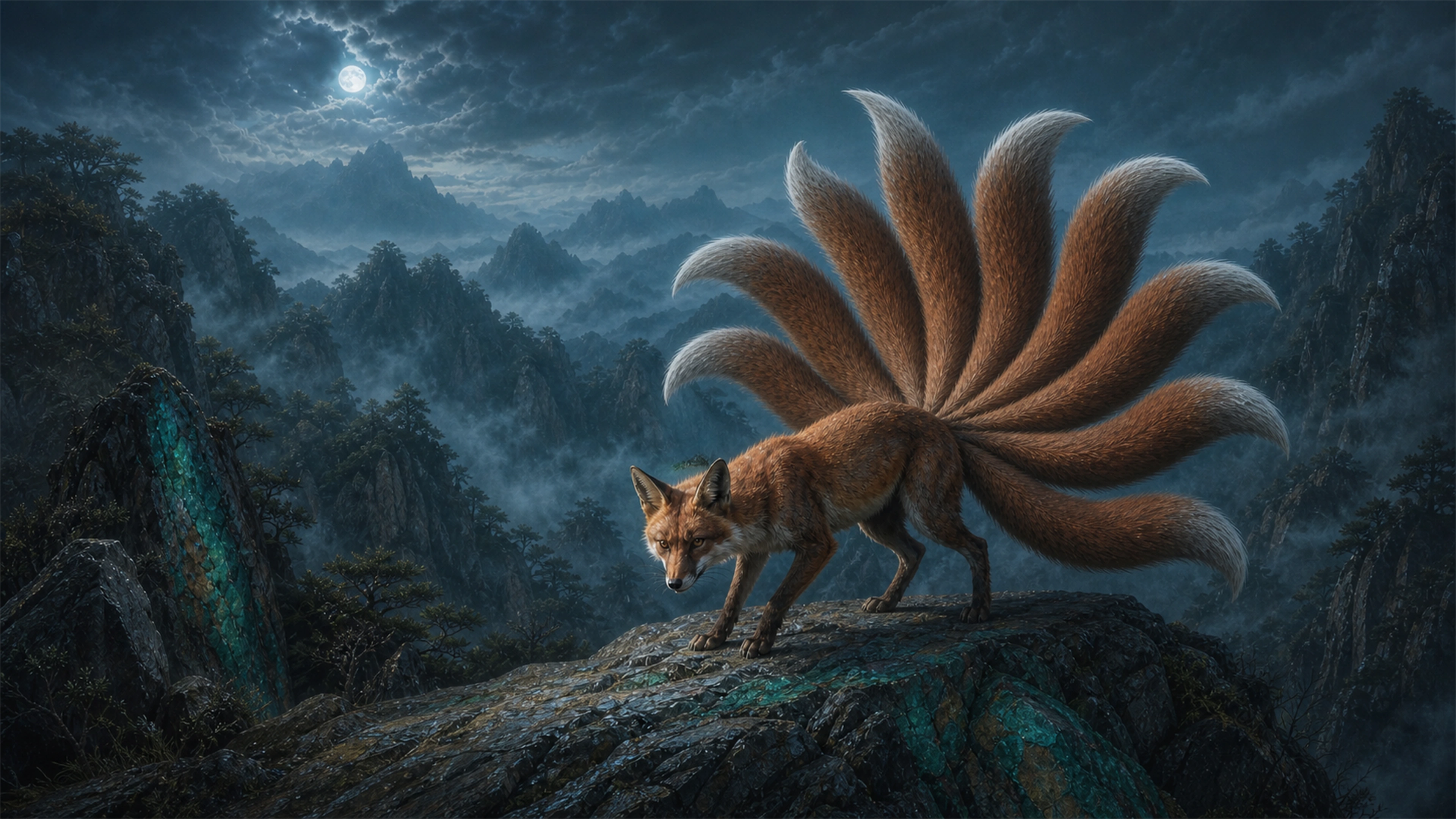
Four independently composed screen ratios—not mechanical crops. Open any framed preview to view the full-size wallpaper in a new page. Free editions carry a light brand mark.
The source passage and modern explanation are presented separately, so the ancient record remains distinct from its present-day reading.
University of Washington Libraries; call number DS707.S4 1667.
The digital reconstruction respects text and image, then uses fox anatomy, gravity, habitat, and light to create a credible living form.


